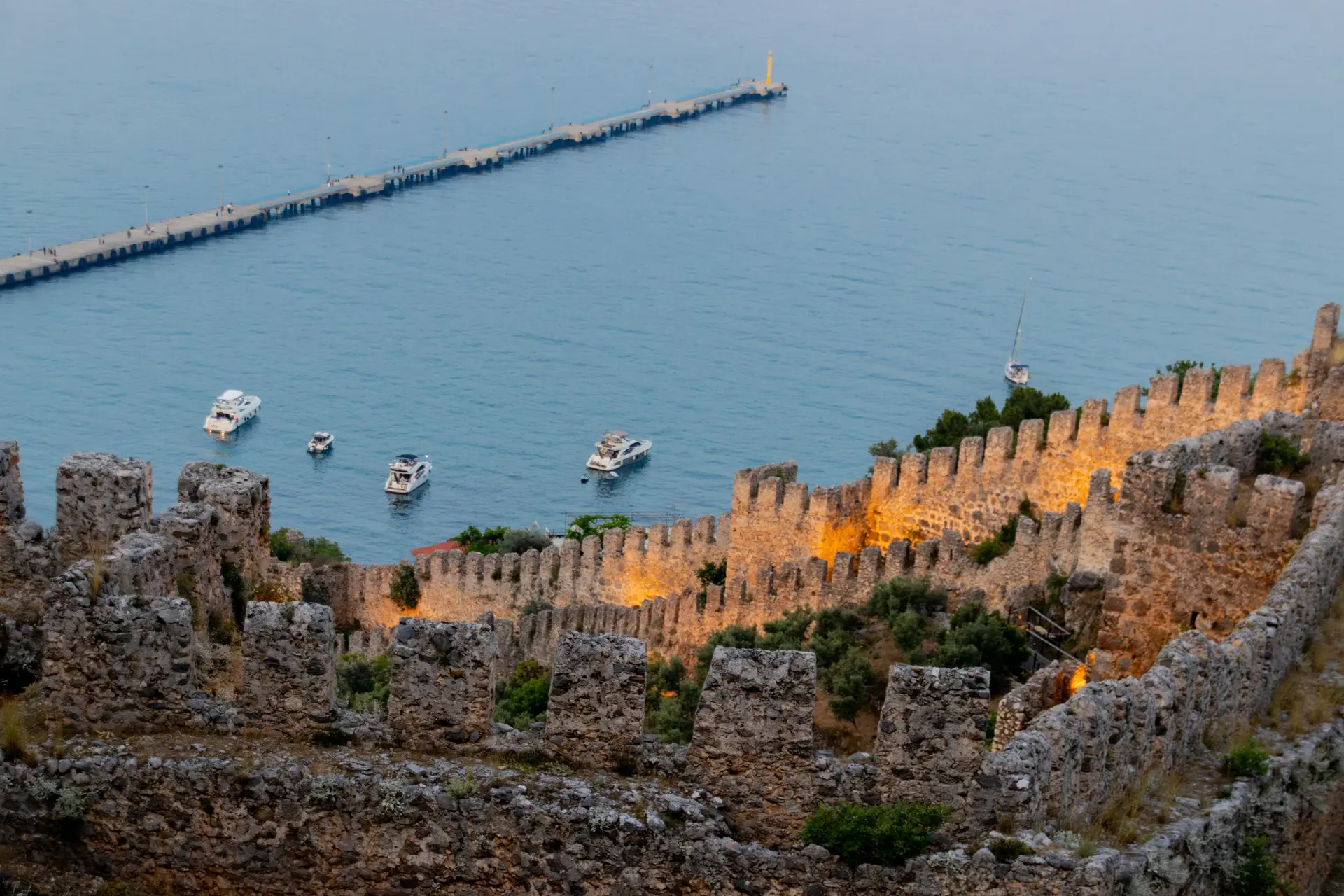
The Sultan built his private winter palace at the highest point of the inner castle.
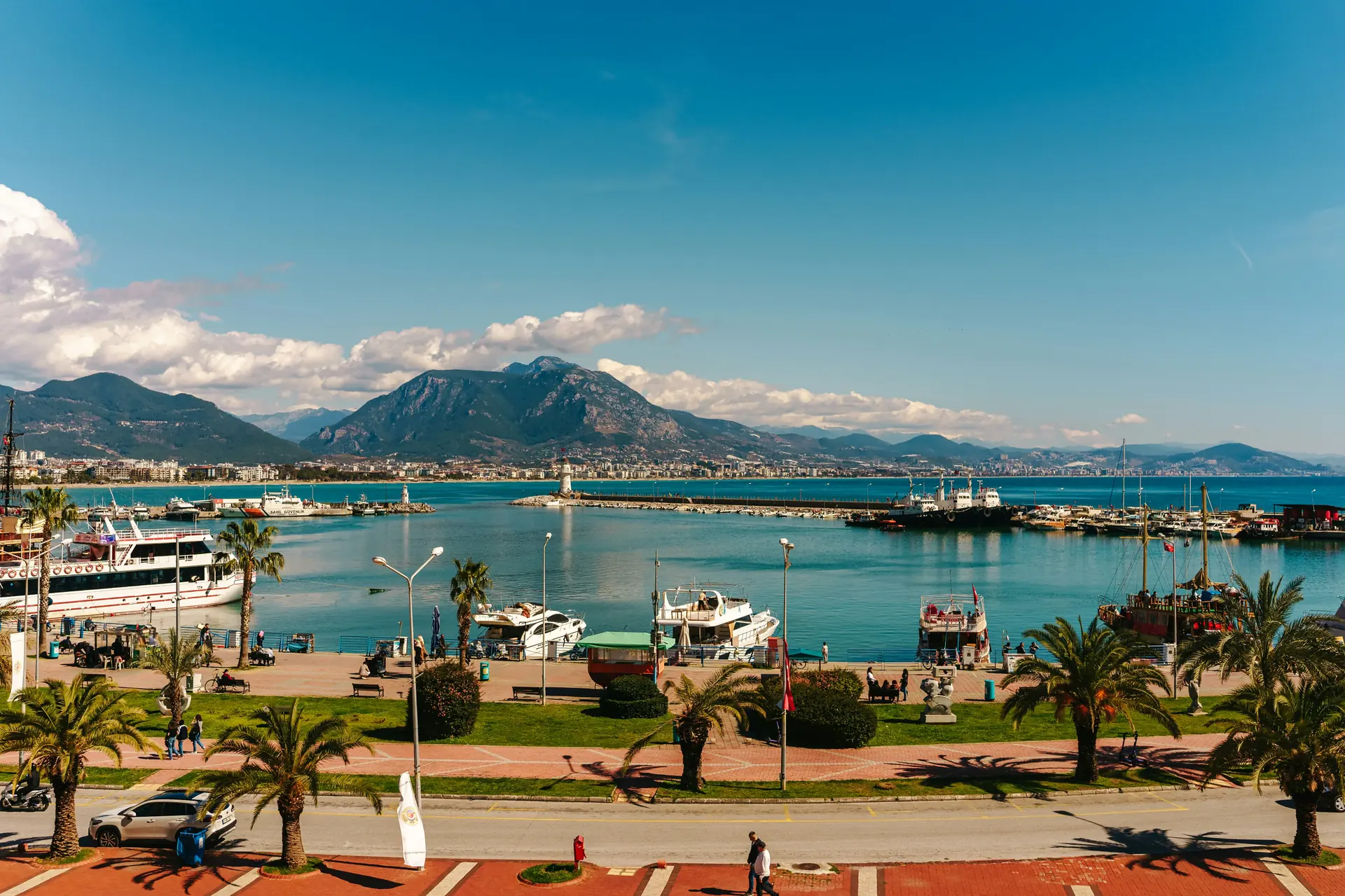
The Red Tower (Kızıl Kule): Completed in 1226 by Aleppo-based architect Ebu Ali Reha, this 33-meter-high octagonal brick tower was positioned at the harbor edge to protect the strategic waterfront.
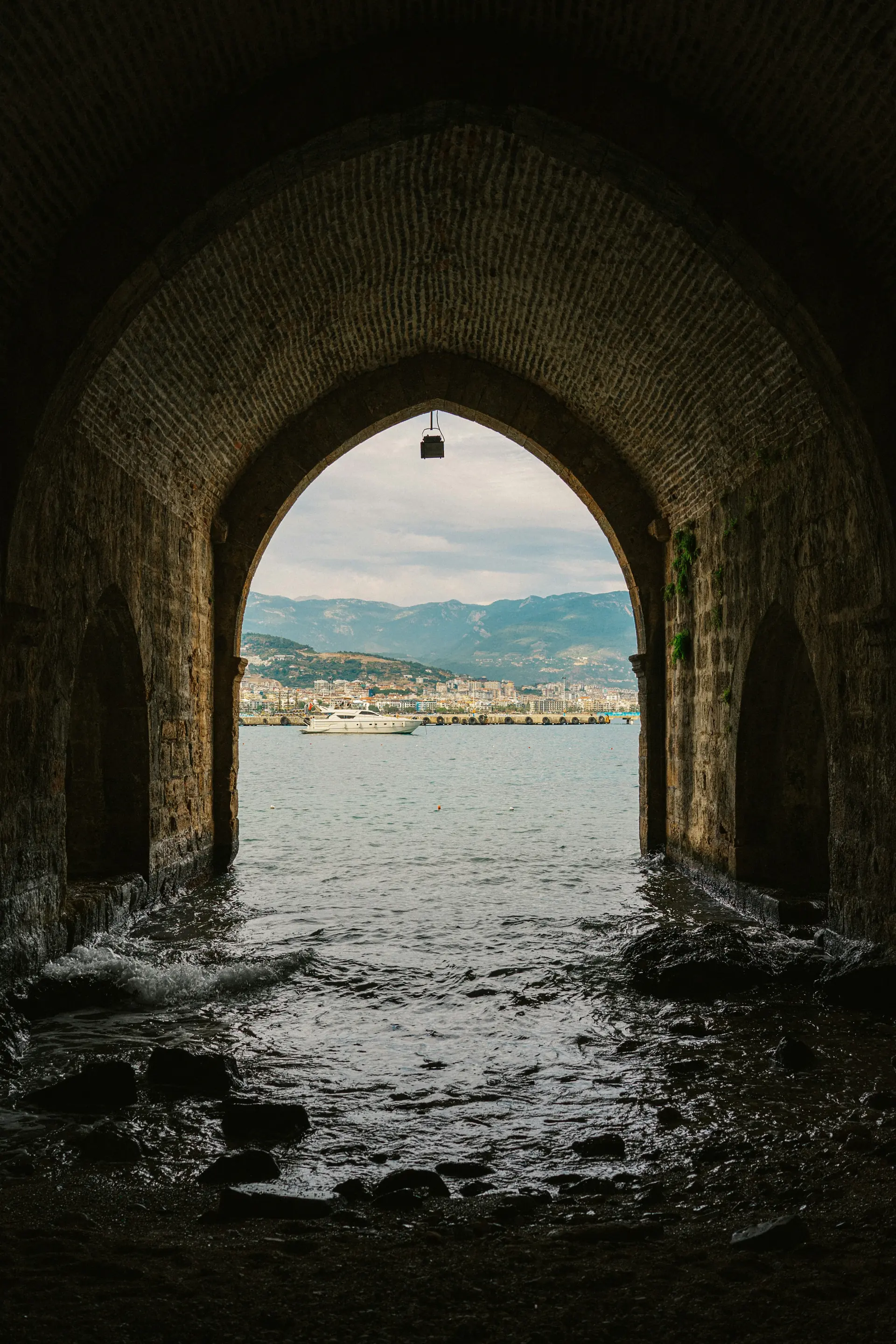
The Shipyard (Tersane): The first Seljuk shipyard built on the Mediterranean coast.
It features five grand stone-arched galleries cutting 42 meters deep into the rock, allowing the sultanate to construct warships safely out of view of hostile passing vessels.
Alaiye became a vibrant commercial hub where traders from Venice, Egypt, and Syria gathered to exchange silk, spices, and local timber.
Ottoman Decline and the Modern Era
Following the collapse of the Seljuk state, the city was briefly ruled by local dynasties like the Karamanoğulları before being formally incorporated into the expanding Ottoman Empire in 1471 by Gedik Ahmed Pasha, under the reign of Sultan Mehmed the Conqueror.
Turkish Archaeological News
Under Ottoman rule, the city lost its status as a royal winter capital. As international trade routes shifted away from the Mediterranean toward the Atlantic, Alaiye's global commercial importance gradually faded, transitioning into a quiet regional port and agricultural center known for producing silk, citrus fruits, and bananas.
Era City Name Primary Strategic Focus
Hellenistic (4th–1st c. BCE) Coracesium Pirate Haven / Rebel Stronghold
Roman / Byzantine (1st c. BCE–13th c. CE) Coracesium / Kalonoros Naval Defense & Timber Trade
Seljuk (13th–15th c. CE) Alaiye Imperial Winter Capital & Naval Base
Ottoman / Modern (15th c. CE–Present) Alaiye / Alanya Regional Port turned Global Tourism Hub
The final chapter of the city's identity was written in 1935 when Mustafa Kemal Atatürk, the founder of modern Turkey, visited the town.
Following a famous typographical error in a historical telegram where the city's name was misspelled, Atatürk officially finalized its modern, easily pronounceable name: Alanya.
In 1948, workers accidentally blasted open Damlataş Cave near the harbor, revealing a cavern filled with stunning stalactites and an microclimate therapeutic for respiratory ailments.
This single discovery sparked the birth of Alanya's modern tourism industry. Today, the ancient defensive walls host an open-air museum, overlooking a sprawling, multicultural city that honors its deep history while welcoming millions of international travelers every year.