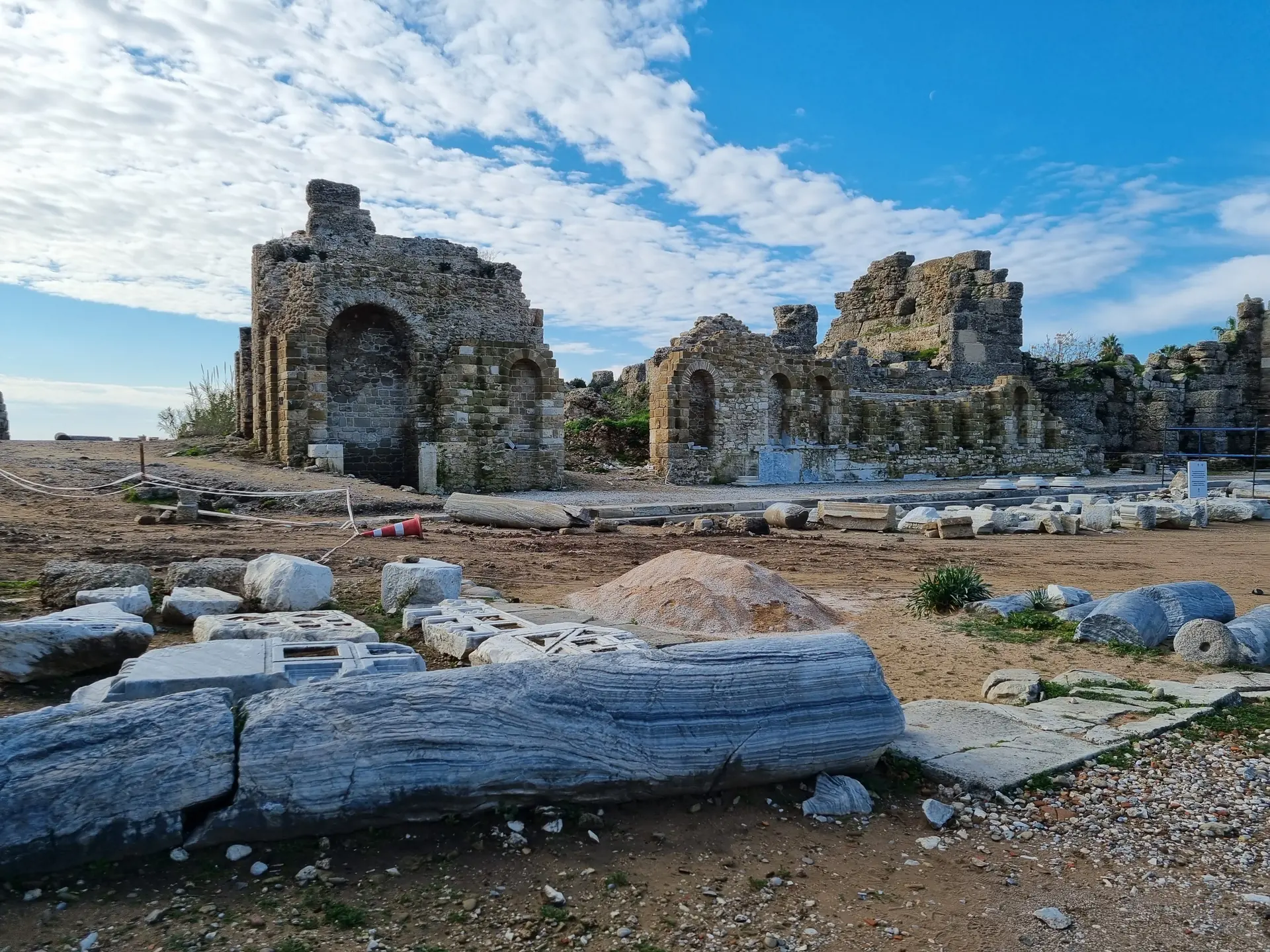
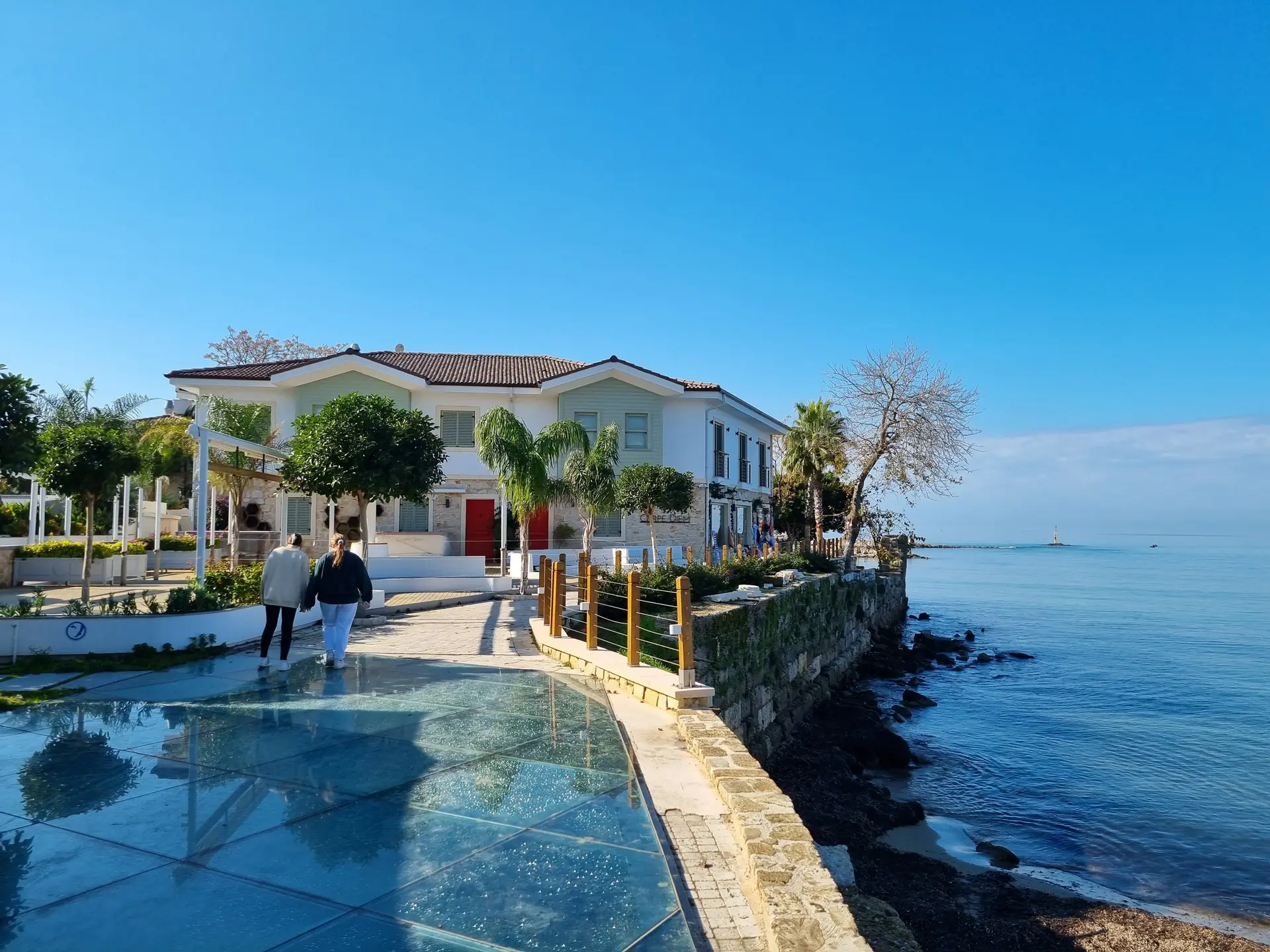

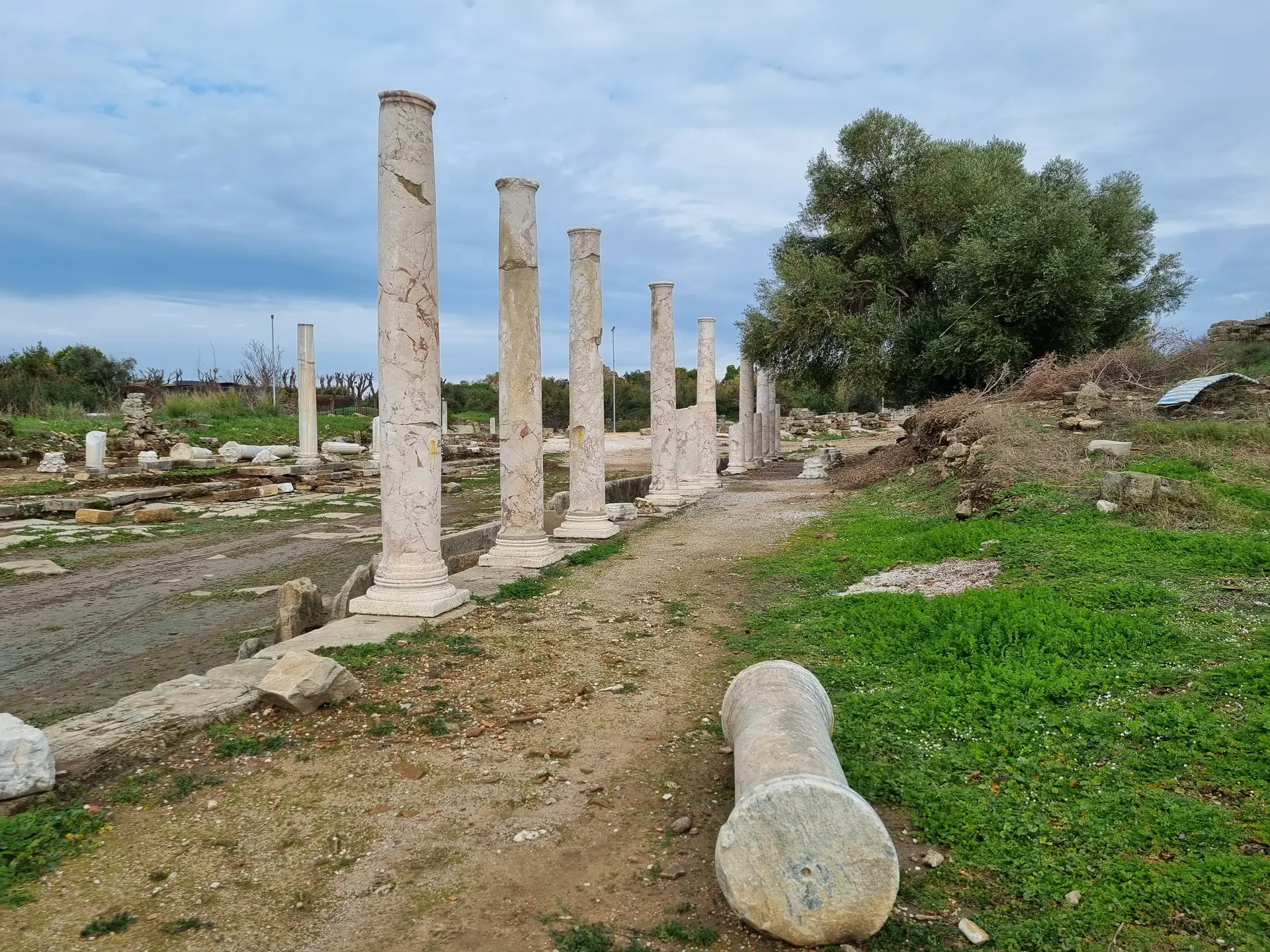
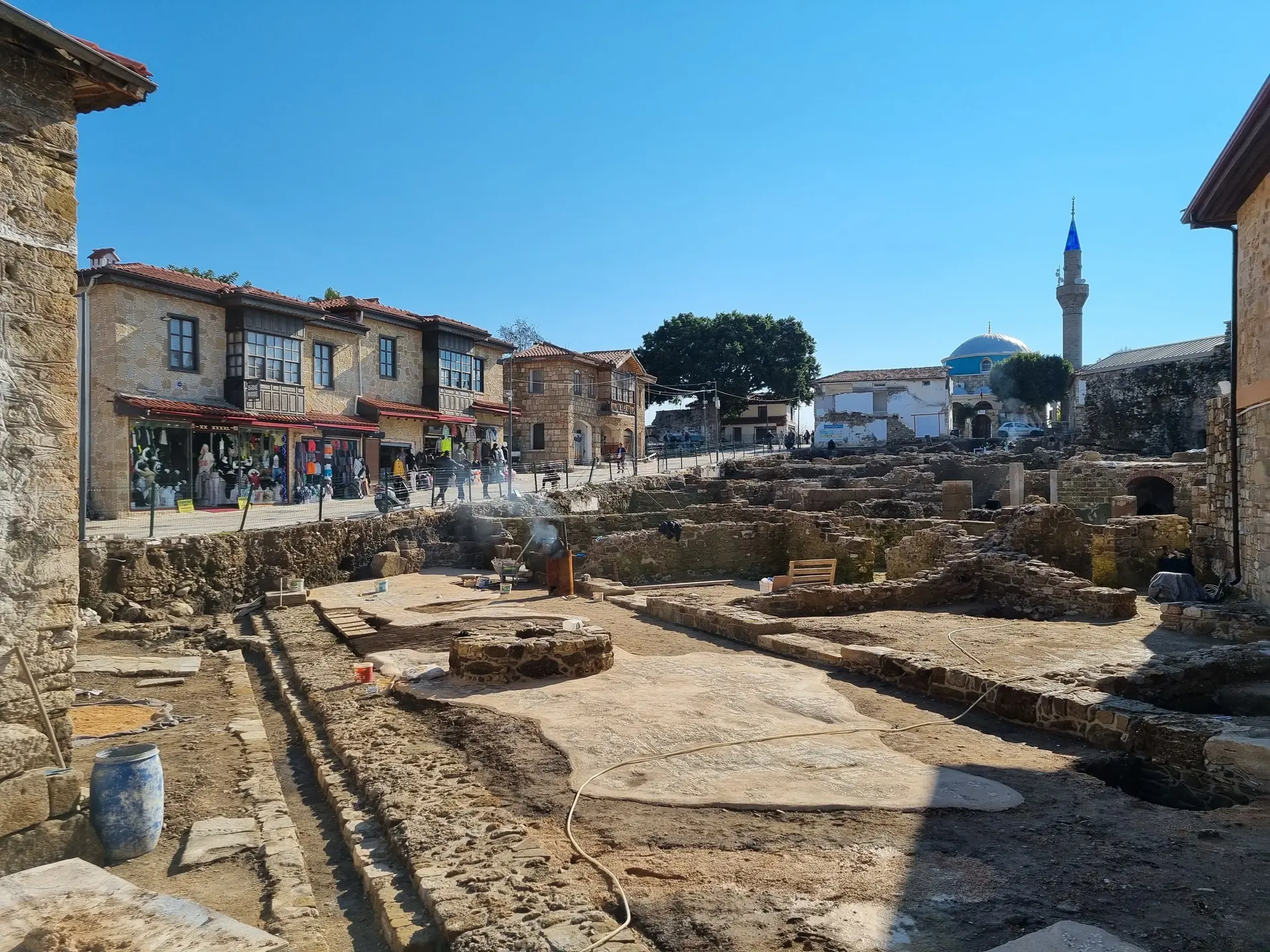
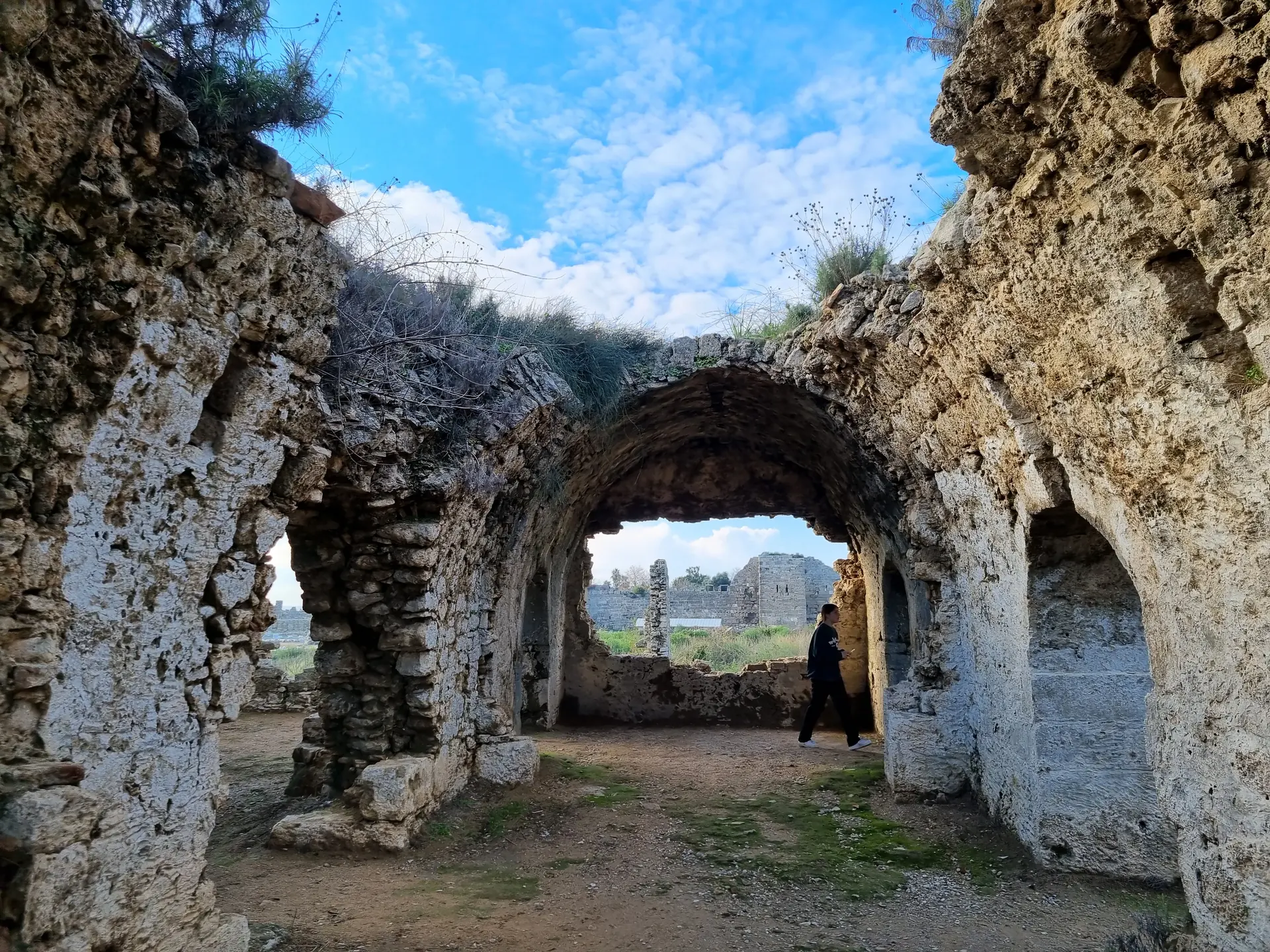
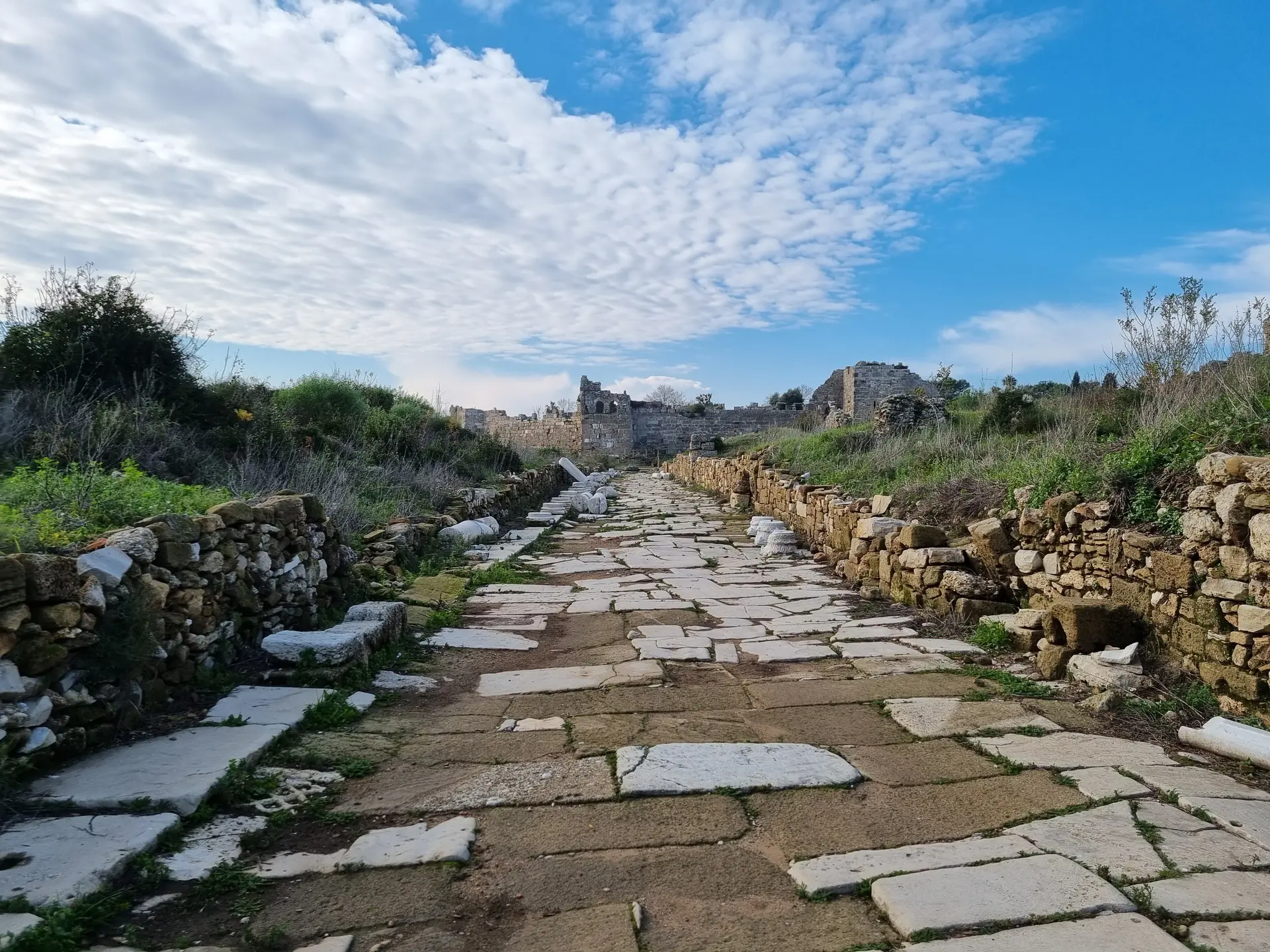
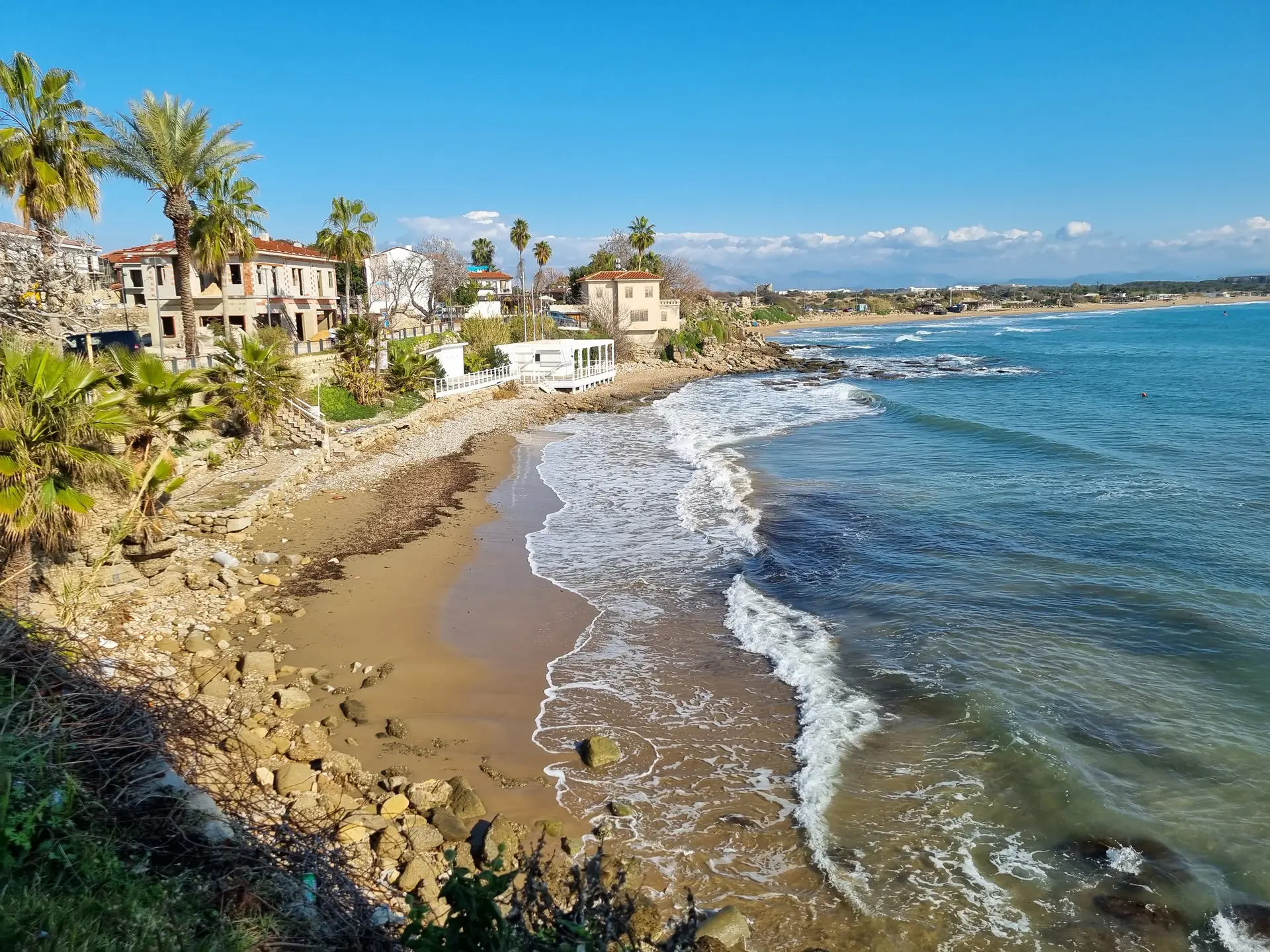
While historical accounts by ancient writers like Strabo note that Side was colonized in the 7th century BC by Greek settlers from Cyme (an Aeolian city in western Anatolia), archaeology tells a subtler story.
Long before the Greeks arrived, a native Anatolian population had already put down roots.
The name "Side" itself does not belong to the Greek language.
In the local ancient Anatolian dialect, it translates literally to "Pomegranate"—a fruit that symbolized fertility, life, and abundance.
The early Greek settlers integrated so thoroughly into the local population that they actually forgot their native Greek tongue.
They adopted the indigenous language, known today as Sidece (Sidetic). To this day, the language remains largely undeciphered, preserved only on a handful of inscriptions and ancient silver coins dating from the 5th and 2nd centuries BC that feature a pomegranate alongside the head of the goddess Athena.
Turkish Archaeological News