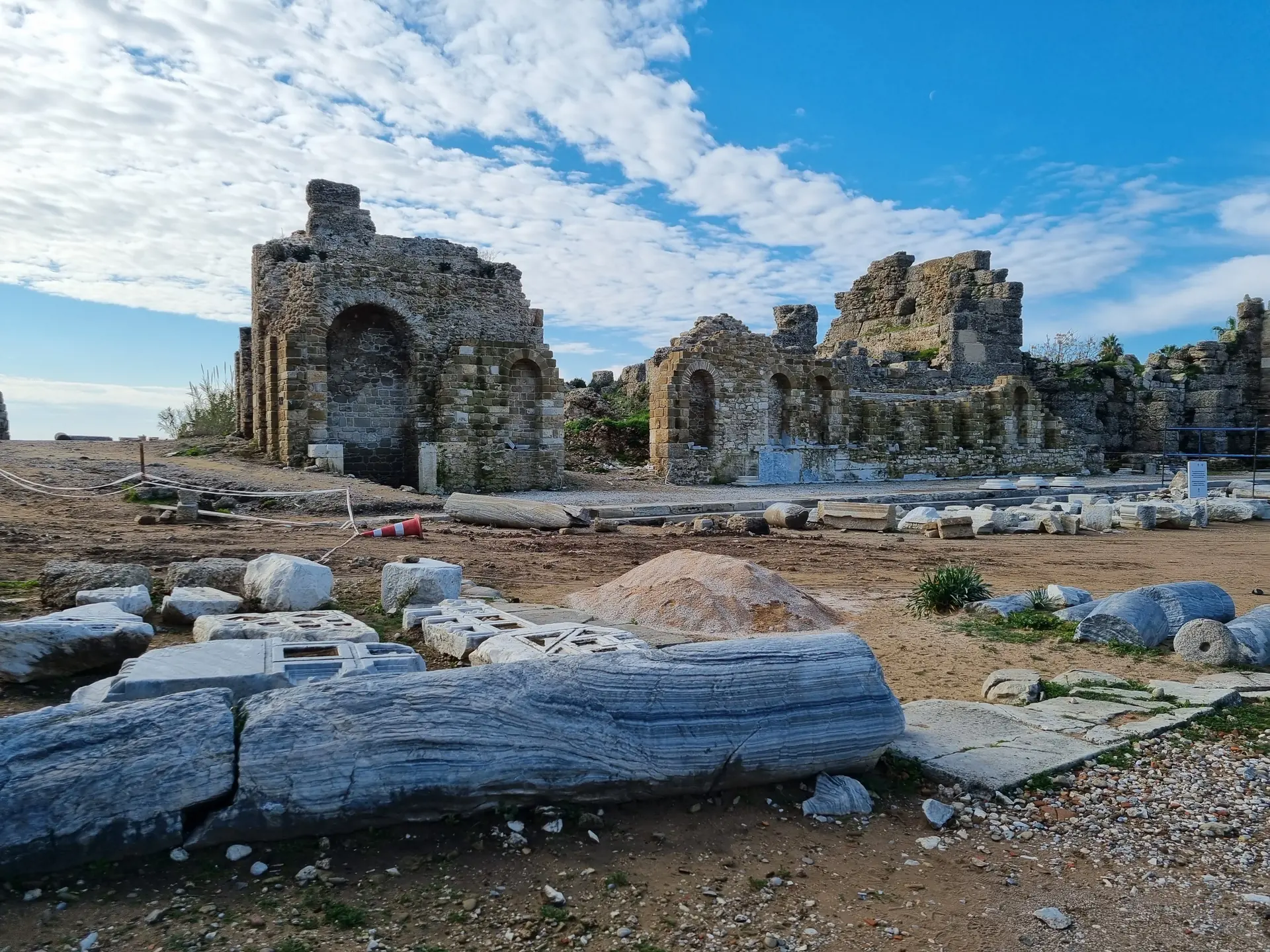
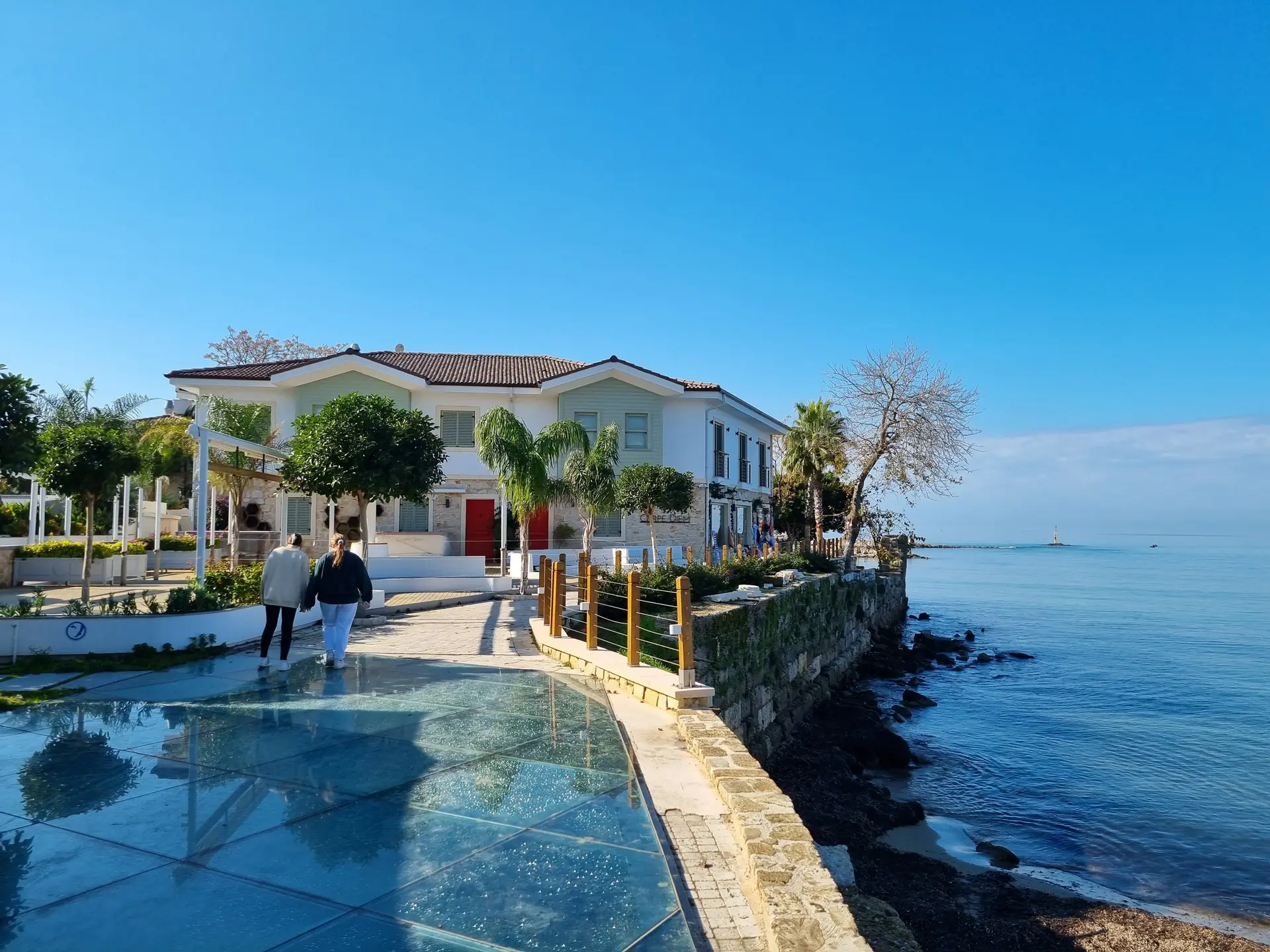
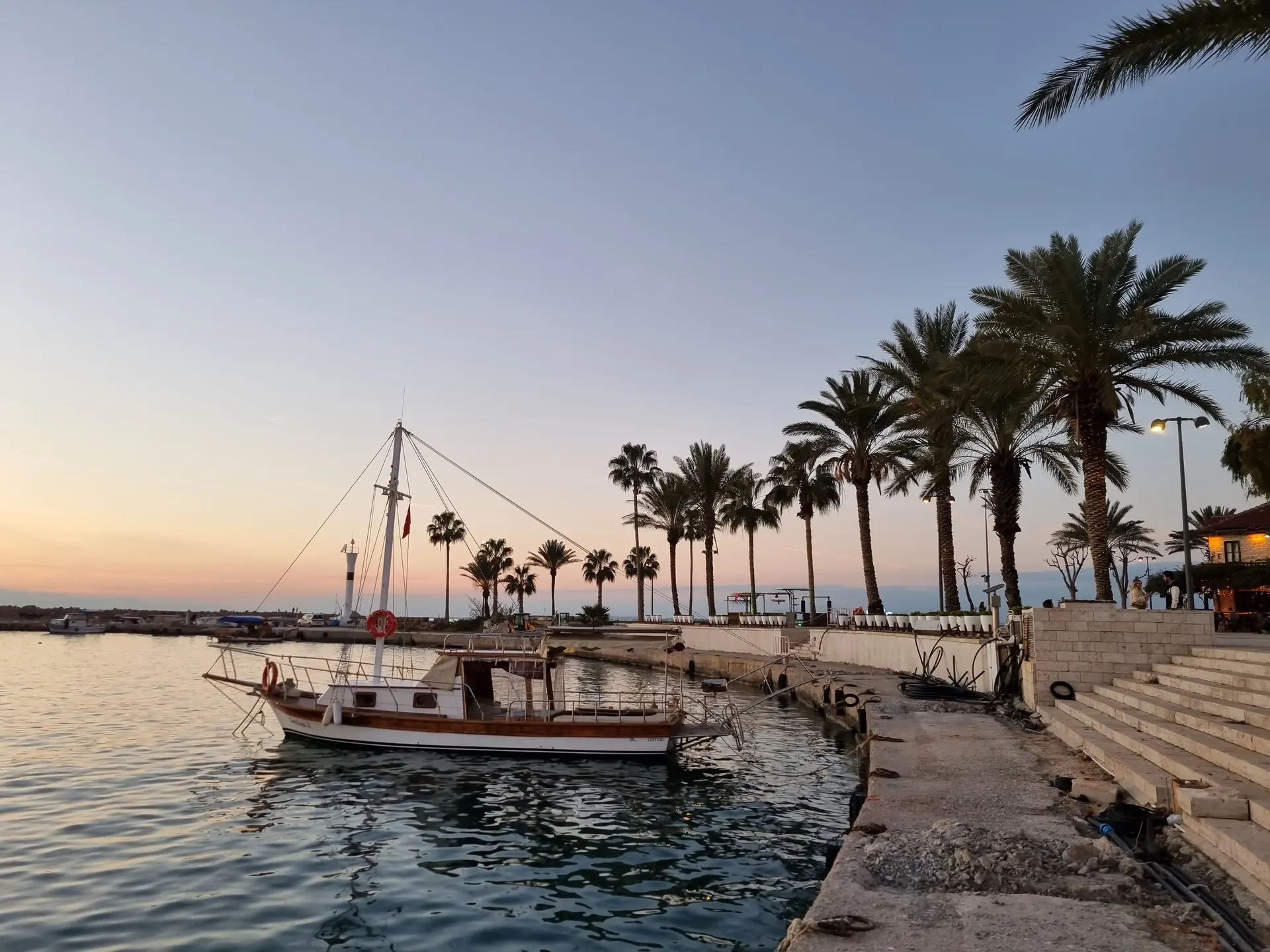
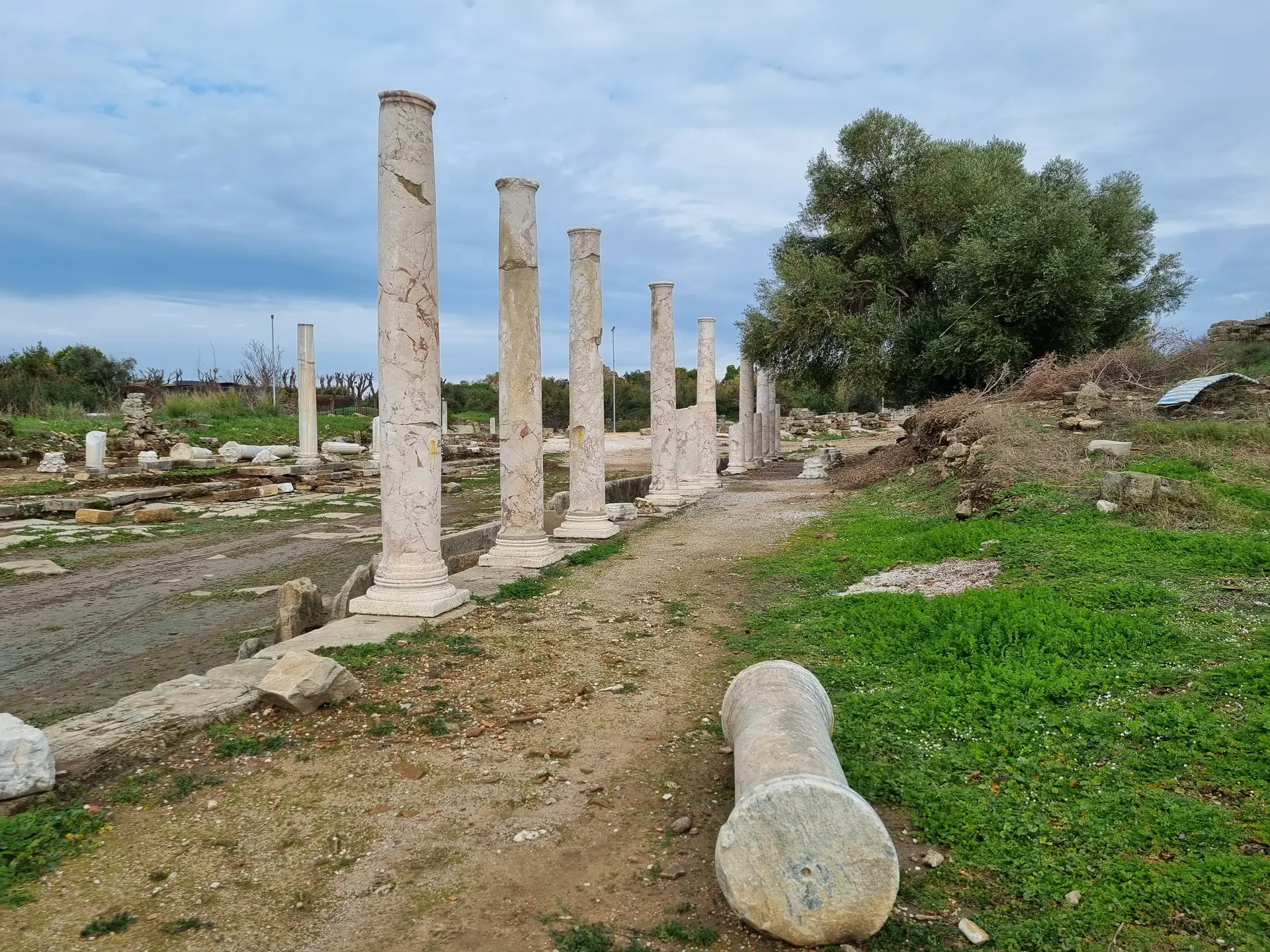
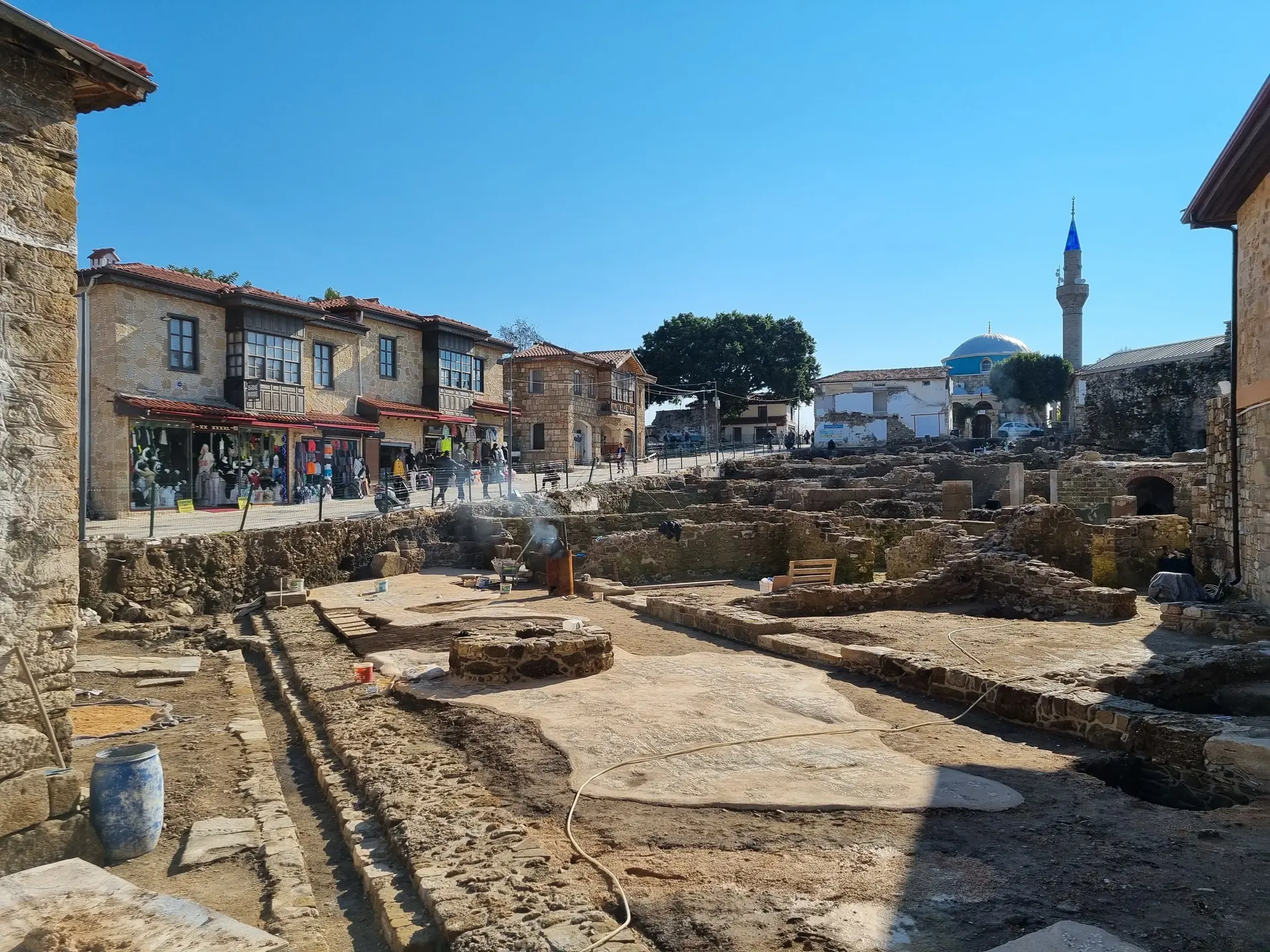
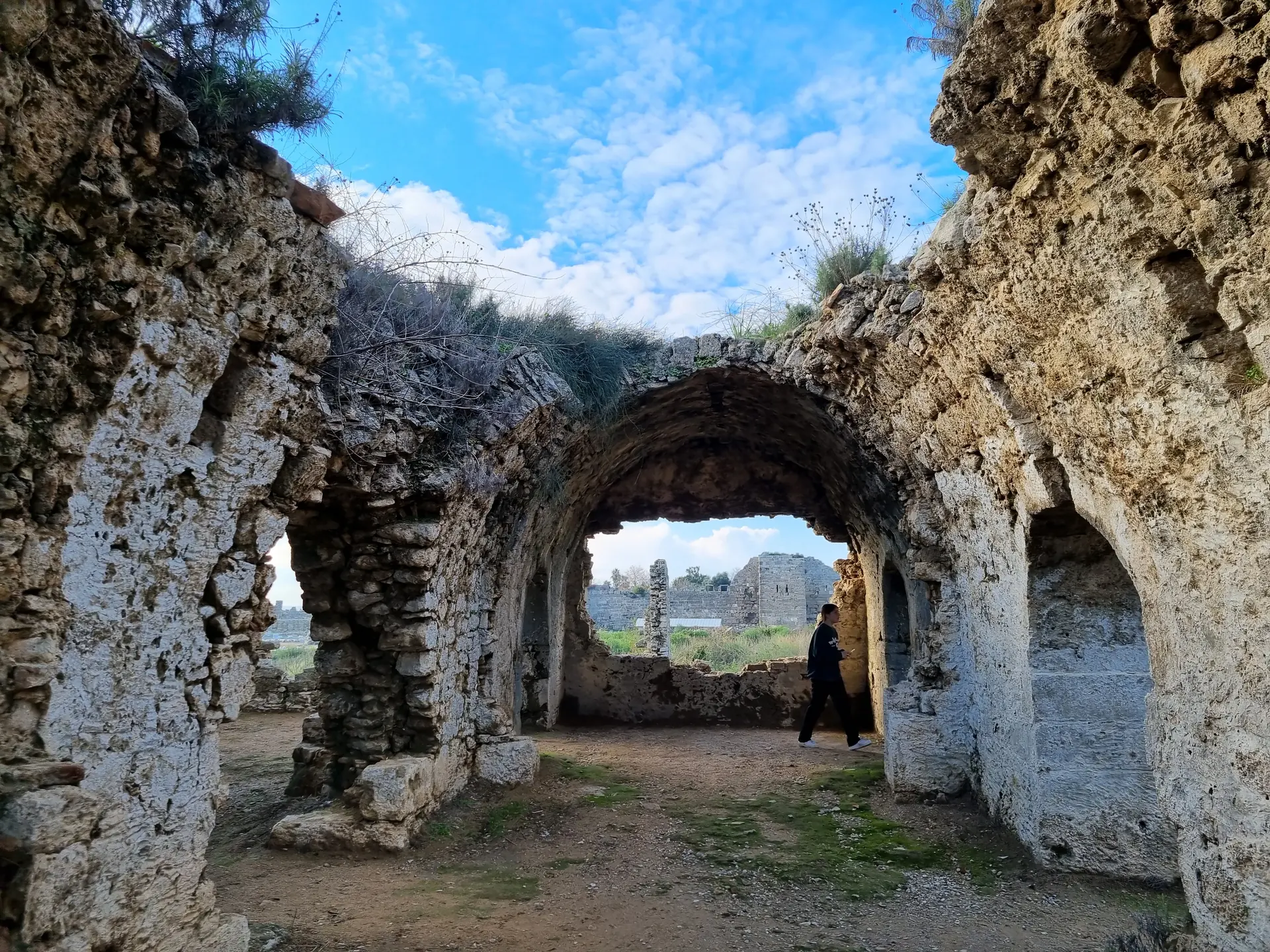
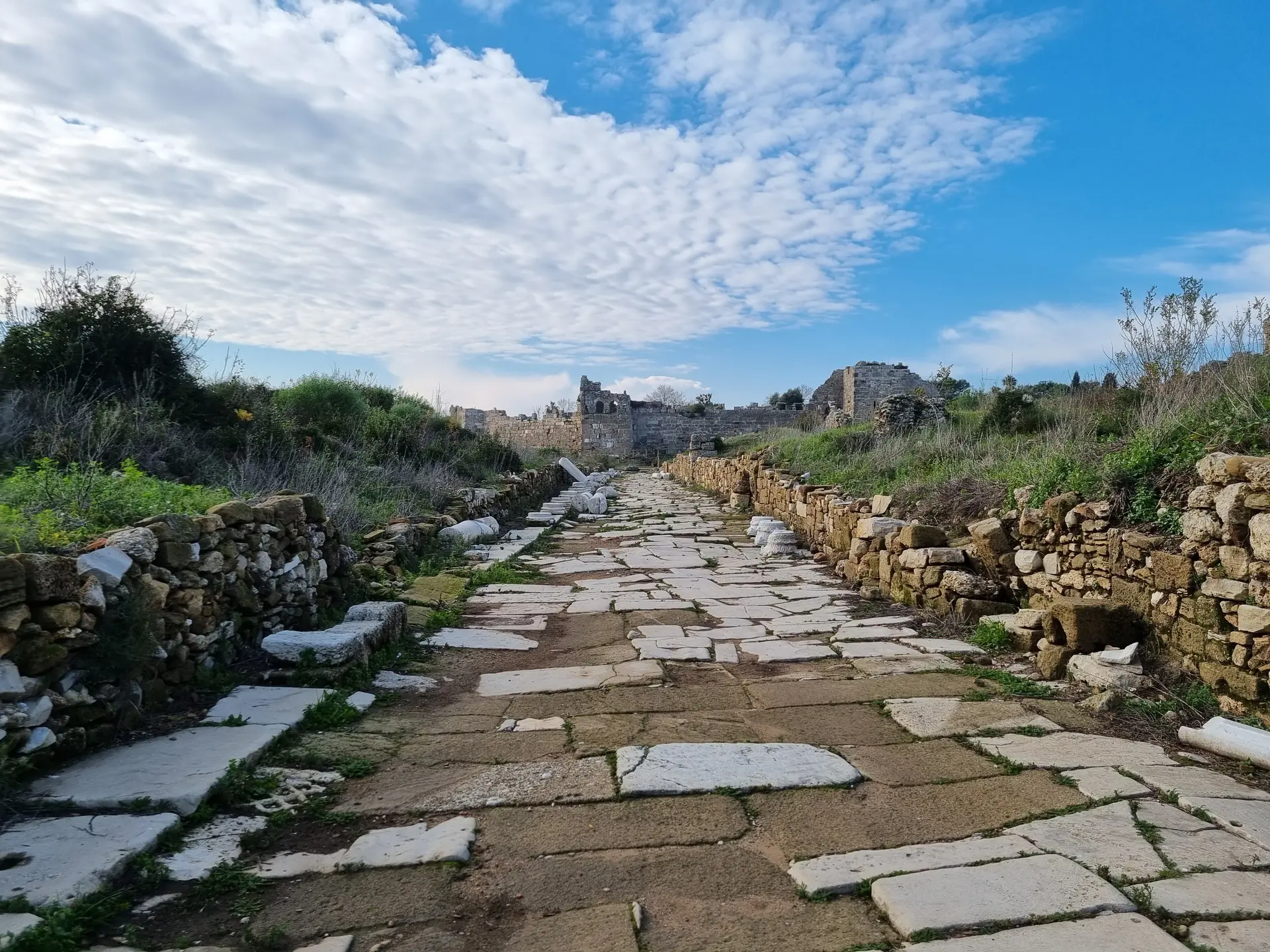
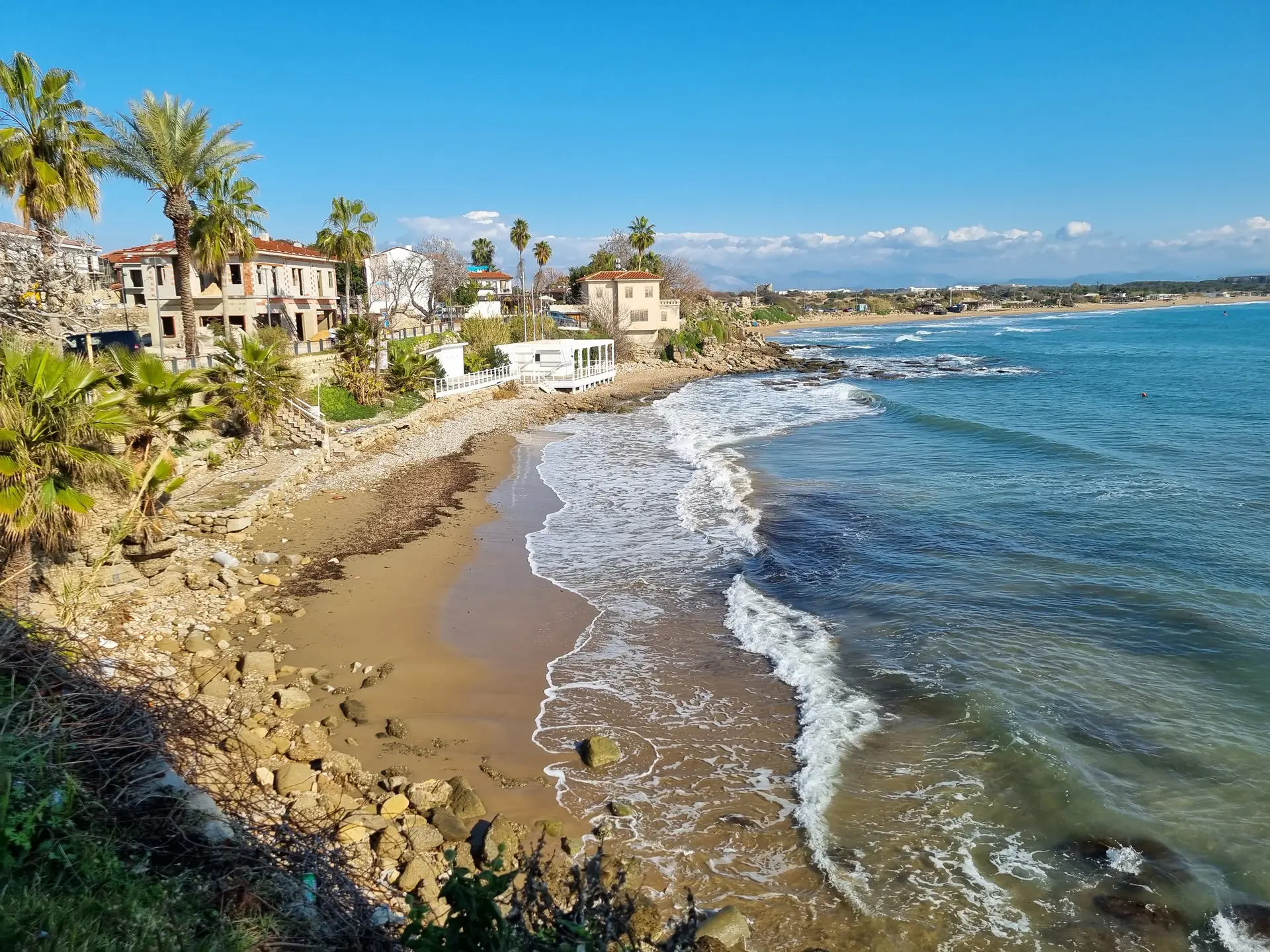
The ancient city occupies a narrow peninsula separated from the mainland by a defensive wall and moat. Walking from the main entrance down to the harbor brings you past centuries of Greek, Roman, and Byzantine architecture.
The Temple of Apollo and Athena
Perched on the very tip of Side’s harbor, these neighboring 2nd-century CE temples are the definitive symbols of the city. While the Temple of Athena remains largely in ruins, five iconic Corinthian columns of the Temple of Apollo have been beautifully re-erected. Looking at the white marble columns framing the turquoise Mediterranean sea offers one of the most stunning photographic backdrops in Turkey.
The Temple of Apollo at the harbor's edge. Quelle: Wikipedia
Built in the 2nd century CE, this massive structure could once hold 15,000 to 20,000 spectators. What makes it unique is its construction engineering: while most Greek-influenced theaters in Asia Minor were carved directly into a natural hillside, Side’s theater is a freestanding Roman design built upward using soaring stone arches. In later centuries, the Byzantines converted the theater into an open-air sanctuary with two distinct chapels.
The Side Archaeological Museum
Housed in a beautifully restored 5th-century Roman bath complex, this museum contains an exceptional collection of artifacts found right on the peninsula. Pay close attention to the highly detailed Roman sarcophagi, intricate marble statues of Greek gods, and inscriptions in the undeciphered native Sidetic language, proving the town maintained a distinct local culture despite heavy Greek and Roman colonization.
The Monumental Fountain (Nymphaeum)
Located right outside the main city gate, this elaborate three-story fountain complex welcomed travelers entering the city. Water was brought down from the Taurus Mountains via a massive 30-kilometer-long aqueduct system to feed this decorative pool and monumental facade.